Outdoor Patio Tips for Better Home Relaxation
A neglected patio can make a house feel smaller than it is. The strange part is that many American homes already have the space needed for better home relaxation, but the space sits half-finished, half-used, or saved for some vague “later” that never comes. Outdoor Patio Tips matter because a patio is not decoration first; it is a living area that happens to be outside. When it works, you feel it in your shoulders before you notice it in the furniture.
Across the USA, patios carry different pressures. A homeowner in Arizona thinks about shade and heat. A family in Michigan wants a spot that survives spring mud and chilly evenings. Someone in Florida needs airflow, rain protection, and bug control. A strong patio respects its location instead of copying a catalog. For homeowners thinking about visibility, local updates, or property-focused content, a resource like home improvement visibility can fit naturally into a broader plan for sharing projects and ideas.
The best outdoor space does not try to impress guests first. It helps you exhale at the end of a normal day.
Designing a Patio Around Real Daily Use
A patio fails when it is planned for an imaginary version of your life. The glossy version has brunch trays, spotless cushions, and friends laughing under string lights. Real life has coffee before work, a tired parent sitting alone for twelve minutes, muddy sneakers near the door, and a dog claiming the best chair. Better design starts there. The more honestly you map your daily rhythm, the more useful your outdoor living space becomes.
Outdoor living space planning that starts at the back door
The path from your kitchen, living room, or bedroom to the patio decides how often you use it. A beautiful setup that takes effort to reach will lose to the couch on most weeknights. Place the first seating zone close enough that stepping outside feels easier than opening a streaming app.
American homes often have a patio door that opens onto a blank slab, and that blankness creates hesitation. Add a small landing area with a weather-safe tray table, a pair of chairs, and a surface for keys, coffee, or a book. That tiny zone becomes the invitation. Outdoor living space does not need to begin with a full redesign.
Distance changes behavior more than people admit. Ten extra steps to grab a cushion, switch on lights, or bring out a drink can turn a peaceful idea into a chore. Store daily-use items near the door, not in the garage. The patio should feel ready before your mood disappears.
Backyard comfort ideas that match your household
Comfort means different things depending on who lives in the home. A retired couple may want quiet morning shade and firm chairs with good back support. A family with kids may need wipeable surfaces, open floor room, and a place where spills do not become a crisis. Backyard comfort ideas only work when they respect the people who will actually sit there.
One counterintuitive choice helps many patios: leave more empty space than you think you need. Furniture stores sell sets as if every patio needs a sofa, two chairs, a coffee table, side tables, ottomans, and a decorative bench. Most patios breathe better with fewer pieces. Open space lets people move, stretch, play, and reset the layout when guests come over.
A useful test is simple. Stand on the patio with your hands full, then imagine where you would naturally set things down. If there is no answer, the design is incomplete. Comfort is not only cushions; it is the absence of small irritations that make you go back inside.
Outdoor Patio Tips for Comfort, Shade, and Privacy
Once the patio matches your daily life, the next challenge is the body. Heat, glare, wind, noise, bugs, and exposed sightlines can ruin a good layout. Outdoor Patio Tips should handle these physical realities before worrying about decorative details. A patio becomes relaxing when it gives your senses fewer reasons to complain.
Patio shade solutions for American weather
Sunlight sounds pleasant until it bakes a chair, blinds your eyes, and turns lunch outside into a test of patience. Patio shade solutions should respond to the region, not the trend. In Texas, Nevada, and Southern California, shade needs strength and coverage. In the Northeast, flexible shade may matter more because homeowners want sun during cooler months.
A market umbrella can help, but it often works best as a starter move rather than the final answer. Pergolas with retractable canopies, shade sails, lattice panels, and roof extensions offer different levels of control. The smartest setups create layers, so you can block harsh afternoon sun without making the patio feel boxed in.
Shade also protects the things you paid for. Cushions fade, wood dries, metal heats up, and plants struggle when the sun hits too hard for too long. Better shade gives the patio a longer life, not only a nicer afternoon. That is the part many homeowners learn after replacing the same cracked items twice.
Small patio privacy ideas without closing everything off
Privacy does not mean building a wall against the world. Many small patio privacy ideas work because they soften exposure rather than erase it. A row of tall planters, an outdoor screen, climbing vines, or a slatted wood panel can shift the feeling from “on display” to “settled.”
Suburban patios often sit close to neighboring yards, and the awkwardness can be subtle. You may not mind seeing your neighbor, but you may still relax less when every movement feels visible. Angled screens solve this better than full barriers because they block the main sightline while keeping air and light moving.
Sound matters too. A small fountain, rustling grasses, or even a fan can blur nearby traffic or conversation. Privacy has texture. It is not only what people can see; it is what your nervous system keeps tracking when you are trying to rest.
Choosing Materials, Furniture, and Lighting That Last
A patio that looks good for one season is not a win. The real test comes after rain, pollen, summer heat, winter storage, and the thousand ordinary moments that wear outdoor pieces down. Materials should make your life easier, not demand constant attention. The right choices turn outdoor home relaxation from a weekend project into a habit that lasts.
Weather-ready furniture that still feels personal
Outdoor furniture should be chosen with the same seriousness as indoor furniture, but with more suspicion. A chair can look perfect online and still feel flimsy, trap water, or sit too low for real comfort. Test seat height, cushion firmness, and arm support when possible. Relaxation starts with posture before style gets a vote.
Powder-coated aluminum works well in many climates because it resists rust and stays lighter than steel. Teak can age beautifully, though it asks for care if you want to preserve its warm color. Resin wicker varies widely, so the frame matters as much as the weave. Cheap pieces often reveal themselves after one rough summer.
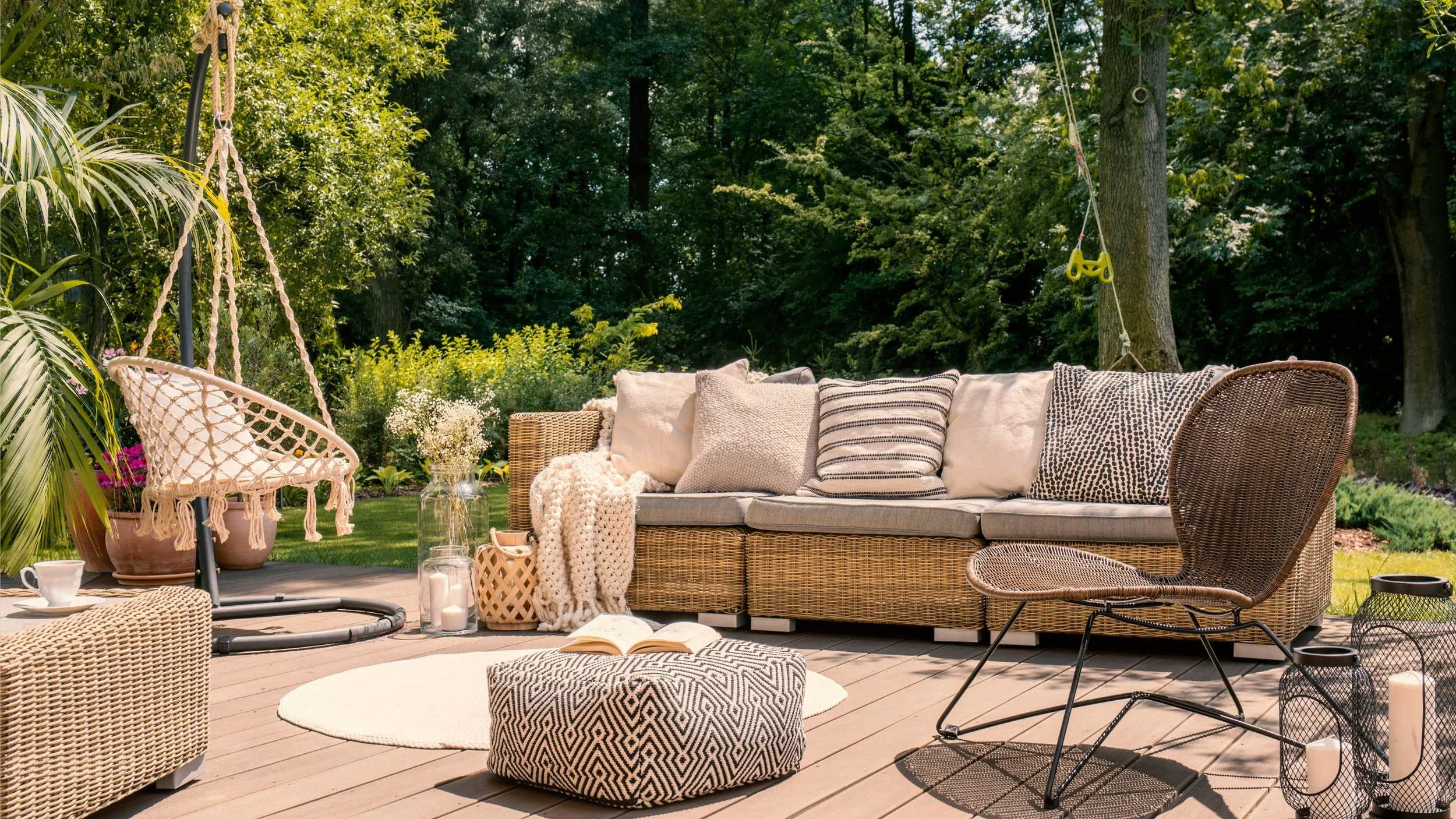
Personality comes through in smaller layers. A patterned outdoor rug, ceramic side table, textured cushions, or locally chosen planters can give the space character without locking you into a full theme. The patio should look connected to your home, not like a furniture showroom landed in the yard.
Outdoor lighting for patios after sunset
Daytime design gets most of the attention, but evenings decide whether the patio becomes part of your routine. Outdoor lighting for patios should create enough visibility for movement while keeping the mood calm. Floodlights may help with security, but they rarely help anyone relax.
Layered lighting works better. Use low path lights for steps and edges, wall lights near doors, and softer lights around seating. String lights can still work, but they should not be the only source. When every bulb hangs overhead, faces can look shadowed and the space may feel flatter than expected.
Warm light usually feels better than bright white light in relaxation zones. It softens hard surfaces and makes even a small patio feel more settled. A good evening patio has a gentle boundary around it, as if the night begins a few feet beyond your chair.
Building a Patio Routine That Keeps the Space Alive
A patio does not stay inviting by accident. Dust settles, cushions shift, plants outgrow pots, and busy weeks pull people indoors. The final layer is not another object; it is a pattern. When you give the patio a routine, it stops being a project and becomes part of how the home works.
Seasonal updates that prevent outdoor clutter
American patios face different seasonal demands, but every region needs a reset rhythm. Spring may call for washing surfaces, checking planters, and pulling furniture out of storage. Summer often means shade tweaks, bug control, and quick cleaning after storms. Fall asks for leaves, covers, and warmth. Winter depends on climate, but neglect still shows.
The mistake is waiting until the patio looks bad. A ten-minute weekly reset beats a full Saturday rescue job. Shake cushions, wipe tables, sweep corners, deadhead plants, and remove anything that migrated outside by accident. Outdoor clutter grows in silence, then suddenly the space feels unusable.
Storage should be close, dry, and simple. A deck box, bench storage, or covered bin can hold cushions, throws, citronella candles, and small tools. The less drama involved in putting things away, the more likely the space survives real life.
Creating relaxation rituals that make the patio worth using
A patio becomes valuable when it earns a repeat moment in your week. That might be coffee outside before checking your phone, dinner on Friday nights, reading after work, or ten quiet minutes after the kids go to bed. Ritual gives the space meaning. Furniture alone cannot do that.
Small cues help the habit stick. Keep one blanket by the door during cooler months. Place a book basket near the seating area. Use a tray for drinks so carrying things outside feels easy. Add one plant you enjoy caring for, not ten that make you feel guilty.
There is a quiet truth here: people use spaces that make them feel successful. If your patio demands setup, cleaning, hunting for supplies, and adjusting everything before you sit down, it loses. If it welcomes you with a chair, shade, light, and a place to put your glass, it becomes part of your day.
A relaxing patio is not built from one purchase or one perfect weekend makeover. It comes from choices that respect your climate, your habits, and the way your household actually lives. The strongest Outdoor Patio Tips are not about copying a style; they are about removing friction until stepping outside feels natural. Start with the one change that would make the space easier to use this week, whether that means better shade, fewer chairs, softer lighting, or a cleaner path from the door. Build from there, and your patio will stop waiting for special occasions and start giving ordinary days a better place to land.
Frequently Asked Questions
What are the best outdoor patio tips for a small backyard?
Start with fewer furniture pieces, clear walking paths, and one strong comfort feature such as shade or lighting. A small backyard feels larger when every item has a job. Use vertical planters, slim chairs, and storage benches to keep the space useful without crowding it.
How can I make my outdoor living space more relaxing?
Focus on comfort before decoration. Add supportive seating, soft lighting, shade, and a nearby surface for drinks or books. Remove clutter and keep daily-use items close to the patio door. A relaxing outdoor living space should feel easy to enter and easy to maintain.
What patio shade solutions work best in hot states?
Pergolas, shade sails, retractable awnings, and large cantilever umbrellas work well in hot states. Choose based on sun direction, wind exposure, and how much coverage you need. In places with intense afternoon heat, layered shade often works better than one small umbrella.
Which backyard comfort ideas are best for families?
Families need durable seating, washable cushions, open floor space, and storage for toys or outdoor items. A table with rounded edges, an outdoor rug, and shade near play areas can make the patio safer and more useful for both kids and adults.
How do I create small patio privacy ideas on a budget?
Use tall planters, outdoor curtains, bamboo screens, or lattice panels with climbing plants. Place them where they block the main sightline instead of surrounding the whole patio. Budget privacy works best when it feels light, natural, and easy to move if your needs change.
What is the best outdoor lighting for patios?
The best outdoor lighting for patios uses layers. Add path lights for safety, wall lights near doors, and softer lights around seating. Warm bulbs create a calmer mood than harsh white lights. Avoid relying only on overhead lighting, which can make the area feel exposed.
How often should I clean and refresh my patio?
A light weekly reset keeps most patios in good shape. Sweep debris, wipe tables, straighten cushions, and remove clutter before it builds up. Seasonal refreshes should include deeper cleaning, checking furniture condition, trimming plants, and adjusting shade or storage needs.
What furniture is best for outdoor home relaxation?
Choose furniture that supports your body, fits your climate, and can handle regular use. Powder-coated aluminum, teak, and high-quality resin wicker are common choices. Cushions should dry quickly and feel comfortable enough for longer sitting, not only brief visits.