
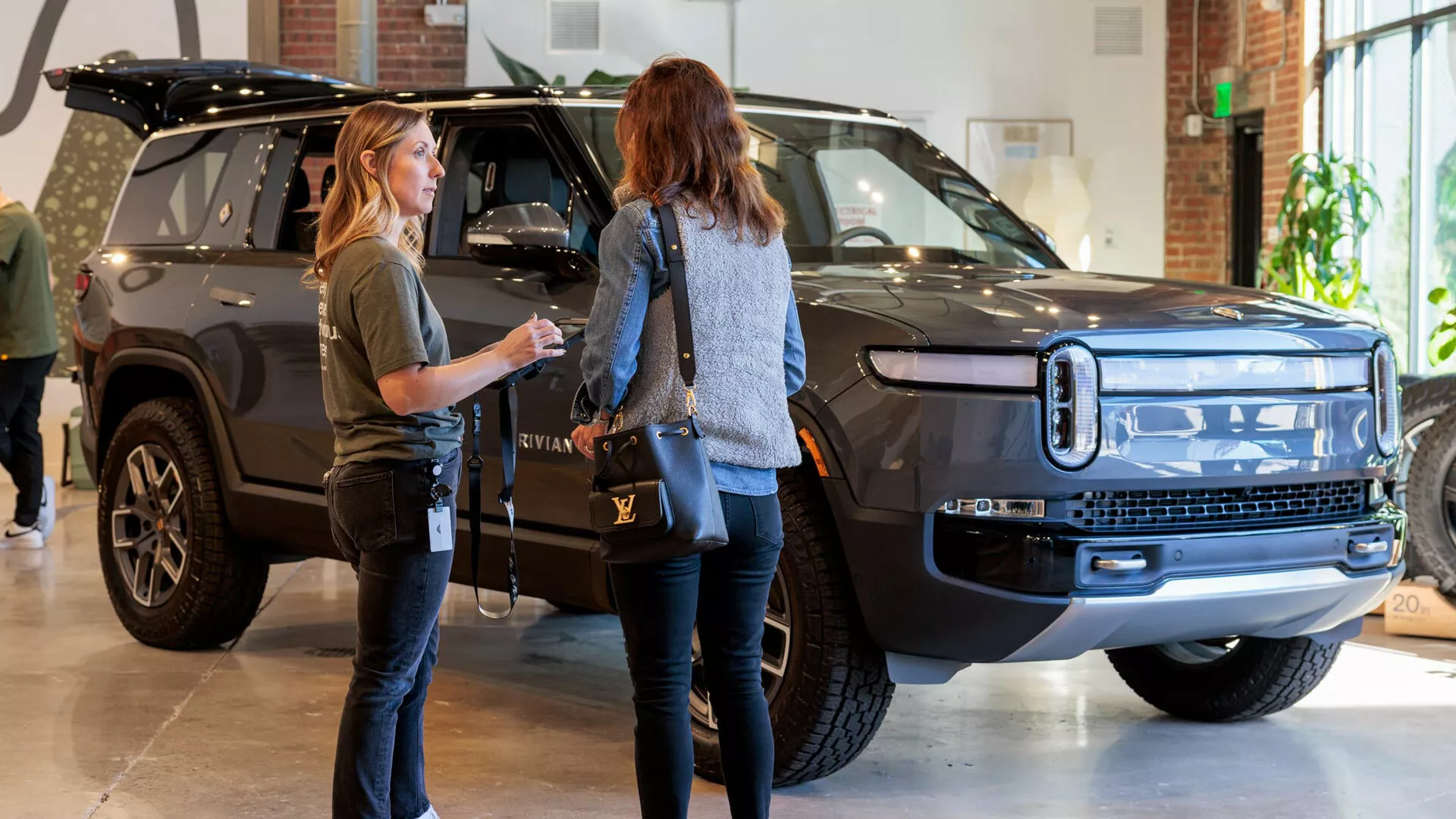
Rivian R1S Electric SUV Production Delays Frustrating Thousands of Customers
Long vehicle waits sting more when the vehicle already feels personal. For many American families, the Rivian R1S is not a casual upgrade; it is the three-row electric adventure SUV they planned around school runs, ski trips, camping gear, dogs, chargers, and a driveway that may already have a Level 2 setup waiting. The frustration comes from a gap between promise and daily life: shoppers see some available R1 Shop builds moving in 1–6 weeks, while custom orders can still stretch into months. Rivian says the faster route is choosing an available configuration, while custom builds show timing during configuration and in the buyer account.
That is why the story belongs less in a complaint box and more in serious consumer tech and auto market coverage. A delayed premium EV is not like a late phone case. It can affect trade-ins, loan approvals, charger installs, family travel, and trust. The real issue is not one missed date. It is whether Rivian can make its R1S delivery timeline feel predictable enough for buyers who already paid with their patience.
Why Rivian R1S Delays Feel Worse Than a Normal Vehicle Wait
The anger around electric SUV delays grows because the buying process does not feel like old-school car shopping. You are not walking onto a lot, haggling for an hour, and driving home before dinner. You configure, reserve, watch email updates, read owner forums, compare build colors, and track account changes. That long digital wait creates attachment before the SUV exists in your driveway.
The problem starts after the order feels decided
A customer who picks a large family EV often makes other choices around it. Maybe the old Tahoe is listed for sale. Maybe the garage gets cleared. Maybe a home charger installer is booked for a Tuesday morning. When the delivery window moves, the whole plan shifts.
That is why a “few more weeks” can feel larger than it sounds. The buyer is not waiting in empty space. They are trying to hold together trade-in value, insurance timing, financing terms, and family expectations. One small change can create four phone calls.
The non-obvious part is that Rivian’s direct-sales model can make delays feel more personal, not less. A traditional dealer can blame allocation, the port, or a regional manager. Rivian owns more of the customer relationship, so buyers expect cleaner answers. When those answers feel thin, electric SUV delays become a trust problem.
Production mix can punish patient shoppers
The most frustrating detail is that patience does not always equal priority. A buyer who ordered earlier may wait longer than someone who chooses an available build that matches current production flow. Rivian’s own support guidance says R1 Shop vehicles are the fastest path, while custom builds are usually a matter of months.
That makes sense from a factory view. It feels awful from a buyer view.
Think of a family in Colorado waiting on a specific paint, interior, wheel, and battery combination. Another buyer in Texas may accept a slightly different build sitting closer to delivery readiness. The second buyer can get keys first, even if the first buyer has been emotionally committed longer. That is not betrayal in the factory spreadsheet. It can still feel like betrayal in the driveway.
This is where the R1S delivery timeline needs clearer language. “Your build is delayed because of configuration mix” would land better than a vague estimate slide. People can handle friction. They handle silence poorly.
The Production Math Behind the Backlog
A modern EV factory is not a vending machine. It has suppliers, battery packs, paint sequencing, software validation, quality checks, carriers, delivery centers, and service teams all pulling on the same calendar. When buyers talk about an EV production backlog, they often picture unfinished SUVs parked somewhere. Sometimes the tighter spot is more boring: the wrong part, the wrong region, or the wrong handoff at the wrong time.
Normal, Illinois has to serve more than one promise
Rivian reported that it produced 10,236 vehicles and delivered 10,365 in the first quarter of 2026 at its Normal, Illinois manufacturing facility. The company also reaffirmed its 2026 delivery guidance of 62,000 to 67,000 vehicles. Those numbers show movement, but they do not tell a shopper when one exact SUV will land.
That distinction matters. Total production can look healthy while certain buyers still wait. A factory can be busy and still miss the exact configuration someone ordered months ago.
Rivian also has to balance the R1T, R1S, commercial vans, and newer model planning around the same broader business pressure. Reuters reported that Rivian delivered 42,247 vehicles in 2025, down about 18% from the year before, while demand for higher-priced EVs faced extra strain after the U.S. federal tax credit expired at the end of September 2025. That context does not excuse a bad customer experience. It explains why every production choice carries more weight.
A delay can come from the last mile, not the factory floor
Some buyers hear “production delay” and assume the vehicle has not been built. That is not always the case. A completed SUV can still be waiting on inspection, transport, paperwork, accessories, delivery-center capacity, or a final software check. None of that feels satisfying when you already cleared your weekend.
The last mile is where premium brands lose patience fastest. A $40,000 delay annoys people. An $85,000 delay can make them question the whole company.
Here is the counterintuitive part: a slow delivery can be better than a rushed handoff if the vehicle needs extra checks. Owners do not want panel issues, software bugs, missing accessories, or a service appointment before the first road trip. The problem is that customers need to know which kind of wait they are living through. A careful delay feels different from a confused one.
That is why the EV production backlog conversation should not be reduced to “build more cars.” Rivian needs more production flow, yes. It also needs cleaner delivery communication at the exact moment buyers are most anxious.
What Customers Can Do Before Their Patience Runs Out
A buyer cannot control the factory. They can control the order strategy. That may sound cold, but it is useful. The best move is to treat the order like a live purchase, not a wish dropped into a queue. You need to know what you will change, what you will not change, and what delay length makes the deal less attractive.
Read the estimate like a working range
The account estimate is not a promise carved into stone. Treat it as a planning range. If the date matters because of a lease ending, a trade-in offer, a move, or a family trip, build a backup plan before the date slips.
That does not mean you should accept every delay with a smile. It means you should separate emotion from action. Ask direct questions. Is the delay tied to your configuration? Is there a similar R1 Shop build? Would changing wheels, paint, or interior open faster timing? Can the delivery location affect the handoff?
A simple buyer checklist helps:
- Save screenshots of every delivery estimate.
- Track finance and trade-in expiration dates.
- Ask whether an available build can replace the custom order.
- Confirm charger installation after the delivery window firms up.
- Review official range data through the official government fuel economy source before changing trims.
For broader planning, a guide like electric SUV buying checklist can help buyers avoid locking every decision to one date. A separate home charging cost guide also helps because charger timing can become a hidden stress point.
Decide where you will and will not bend
Flexibility can shorten the wait, but only if you define it before frustration takes over. Some buyers care most about battery pack and drivetrain. Others care about interior color because they have kids, pets, heat concerns, or resale plans. A smart compromise is not random. It protects the parts of the purchase that matter most.
For example, changing from one exterior color to another may be harmless if the SUV is mainly a family hauler. Changing battery size may affect road-trip confidence. Swapping wheels may change ride feel, range, tire cost, and winter setup. Not every option carries the same weight.
This is where buyers should avoid the panic pivot. A shopper who waits six months can make a bad decision in six minutes after seeing an available build. The better move is to write a short “yes/no” list before contacting Rivian.
The R1S delivery timeline may still shift, but you will not be negotiating with your own impatience. That matters. A premium EV should fit your life after the keys arrive, not only end the waiting pain.
What the Delay Says About Rivian’s Next Chapter
Rivian’s challenge is bigger than a few late SUVs. The brand has built a strong identity around adventure, design, software, and an owner culture that feels different from older automakers. That identity gives Rivian room to ask buyers for patience. It does not give the company unlimited room.
Premium buyers forgive waits only when updates feel honest
A premium customer can accept scarcity. Many luxury and performance brands have trained buyers to wait for the right build. The difference is that those brands often wrap the wait in ritual: a production slot, a build date, a shipping status, a dealer call, a delivery event. The wait becomes part of ownership.
Rivian has the chance to do that, but it must make the experience feel less like refreshing an account page. Clearer status labels would help. So would plain explanations when a configuration is held by parts, transport, quality review, or delivery-center capacity.
The strange truth is that electric SUV delays can even strengthen a brand when the product feels worth waiting for. Scarcity can create desire. But that only works when buyers feel respected. Scarcity without clarity turns into resentment.
Rivian’s R1 lineup also changed this week in a way buyers will notice. Car and Driver reported on June 26, 2026, that Rivian removed the least expensive Dual Motor Standard Pack versions of its R1T and R1S from the configurator, raising the entry point for the remaining Large Pack versions while adding range. That kind of lineup move can make waiting customers more sensitive to price, value, and timing.
The R2 shadow changes the pressure on every R1 order
Rivian is no longer judged only by its first premium vehicles. The company is also preparing for a broader market where the smaller R2 carries huge expectations. Reuters reported that Rivian expects a delivery jump in 2026 tied to the lower-priced R2, while the existing R1 models are expected to remain steadier.
That creates a tricky mood for R1 buyers. They paid for the flagship experience, but much of the public attention is shifting toward the next model. Nobody spending premium money wants to feel like yesterday’s priority.
The company has to prove it can do two things at once: protect the high-end owner experience and scale into a wider market. If the R1 order process feels strained now, buyers will wonder what happens when volume grows. That may be unfair, but it is natural.
The EV production backlog is not only a factory story. It is a credibility test. Rivian has the product appeal. It has owner passion. It has a clear American adventure niche. The next step is making the wait feel as well-built as the SUV.
Conclusion
A delayed EV does not become easier to accept because the brand has a loyal fan base. In some ways, loyalty raises the standard. People who want this SUV have often followed the company for years, watched reviews, planned trips, and defended the choice to friends who still trust gas-powered three-row vehicles.
The Rivian R1S sits in a rare place: premium enough to demand patience, but practical enough that families need it to arrive when promised. That is why vague timing hurts. Customers are not asking for magic. They are asking for a delivery process that matches the care put into the vehicle itself.
Rivian can still turn this tension into trust. Better status updates, clearer configuration guidance, and more honest language around production limits would calm many buyers before frustration hardens. The SUV already has desire on its side. Now the company has to make the waiting experience feel less like a gamble and more like a path.
Frequently Asked Questions
Why are some R1S orders delayed?
Delays can come from configuration mix, factory scheduling, delivery-center capacity, transport timing, paperwork, or final quality checks. A custom build may take longer than an available R1 Shop vehicle because it has to match production timing, not only customer demand.
How long does an R1S delivery usually take?
Rivian says available R1 Shop vehicles can deliver in 1–6 weeks, while custom builds are usually shown as a matter of months during configuration. The exact wait can change based on build choices, region, and delivery logistics.
Can changing my configuration speed up delivery?
Yes, it may help if your current build depends on a slower paint, wheel, battery, or interior combination. Ask Rivian whether a nearby available build matches your must-have features before changing anything that affects range, comfort, or resale.
Is it better to choose an R1 Shop vehicle?
It can be better for shoppers who care more about timing than exact customization. The tradeoff is choice. You may get the SUV sooner, but you may have to accept a different color, wheel set, interior, or battery setup.
Should I install a home charger before delivery?
Plan early, but avoid locking the install date too tightly to an estimate that may change. Get quotes, check panel capacity, and understand permit timing. Schedule final work when your delivery window feels firm enough to avoid wasted appointments.
Do production delays mean the SUV has quality problems?
Not always. A delay can happen before production, during transport, or at the delivery stage. Extra checks may protect the buyer from early service visits. The issue is not the existence of checks; it is whether the reason is explained clearly.
Will R2 production make R1 wait times worse?
It could add pressure if factory capacity, parts planning, or delivery teams are stretched. It could also help Rivian improve systems at scale. Buyers should watch whether communication improves as the company handles more models and more customers.
What should I ask Rivian if my date moves?
Ask what caused the change, whether your configuration is the issue, whether a similar available build exists, and whether your delivery center affects timing. Also confirm how long your financing, trade-in, and purchase documents remain valid.