
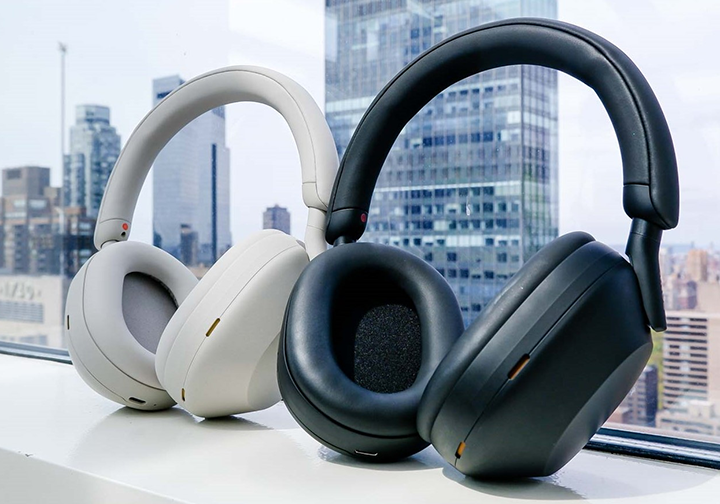
Sony WH1000XM6 Headphones Leak Revealing Completely Redesigned New Look
The first thing people noticed was not a spec sheet. It was the shape, because the Sony WH1000XM6 Headphones leak suggested Sony had listened to years of small complaints about travel, storage, hinges, and daily comfort. That matters for U.S. buyers who wear noise-canceling cans on flights, trains, shared offices, and late-night work sessions at the kitchen table. The leak first pointed to a May 2025 launch and a higher U.S. price, then Sony’s official launch confirmed the XM6 as a foldable flagship with a QN3 processor, 12 microphones, and stronger noise control. For anyone tracking product news through consumer technology coverage, the better story is not “Sony made another headset.” It is that the design seems aimed at fixing the one thing many XM5 owners could feel every day: the old model took up too much room for headphones that were supposed to go everywhere.
Why the Sony WH1000XM6 Headphones Leak Felt Different From a Normal Product Rumor
Most gadget leaks give buyers a blurry photo and a few loose claims. This one landed harder because the shape carried a message. Sony had already won trust in noise control, sound tuning, and app features, so the real tension was not whether the next pair would sound good. The question was whether Sony would admit that a flagship travel headset has to travel well.
The leak also arrived in a market that has become less patient. People no longer treat $400-plus headphones as fun accessories. They treat them like work tools, travel gear, and mental space makers. When a product sits on your head for hours, small design choices stop being small.
The redesign told shoppers what Sony heard
The WH-1000XM5 looked clean on a desk, but its non-folding frame made it a strange fit for life outside the desk. A commuter could drop it into a backpack, sure, but the case took space that might otherwise hold a water bottle, a small camera, or a lunch container. On a packed flight from Chicago to Phoenix, that sort of space is not theory. It is the difference between a tidy personal item and a bag that fights you under the seat.
The leaked design was interesting because it did not chase a loud visual stunt. It pointed back toward a folding form, which was the feature many XM4 fans missed. That is a quiet admission from Sony. Sometimes the next design step is not a wilder shape. Sometimes it is a return to the thing people already loved, rebuilt with cleaner parts.
That is also why the leak had a stronger pull than a normal color change. Sony noise cancelling headphones already had name power in the U.S. market. The redesigned form suggested the company was not only protecting that name; it was correcting a daily pain point.
A less obvious detail is that this kind of correction can build more trust than a flashy addition. People forgive a brand faster when the fix is aimed at a complaint they have said out loud. You can almost hear the old XM5 owner thinking, “Fine, that was the issue.”
A leak becomes useful when it answers a daily problem
The most useful leaks are not the ones with the longest spec list. They are the ones that help you picture the product in your own day. If you ride Amtrak, fly twice a month for work, or move between a coffee shop and a home office, the WH-1000XM6 redesign gives you an easy mental test: will this fit into the bag you already carry?
That test matters more than many shoppers admit. Premium wireless headphones are not bought for one perfect listening session. They are bought for hundreds of small uses: muting leaf blowers while writing, taking calls from a parked car, blocking TV noise in a shared apartment, or making a middle seat on a cross-country flight less draining.
This is where rumor turns into buying logic. A leak about one hinge can be more useful than five loose claims about audio magic, because a hinge changes whether you bring the headset with you. Gear that stays home cannot save a bad commute.
The counterintuitive part is simple. The “new look” matters least when the headphones are on your head. It matters most when they are off your head, folded into a case, sitting in a backpack, or waiting on a crowded tray table. That is where design either earns loyalty or starts to annoy you.
The Foldable Shape Signals a Practical Reset
A foldable frame can sound like a minor change until you have lived with a non-folding headset for a year. Then it becomes the whole argument. The XM6 story is not only about a sleeker silhouette. It is about Sony moving back toward a more portable rhythm while trying to keep the polished feel people expect from premium wireless headphones.
The reset matters because the XM line has never been only about sound. It has been about control. Control over airplane noise, office chatter, nearby traffic, and the low-grade fatigue that builds when a day gets loud. A portable design extends that control beyond the couch or desk.
Portability is the design feature buyers can feel
Sony’s own product page presents the XM6 around folding movement and portability, while the support page even has guidance for folding the headphones correctly. That tells you something. The hinge is not a background detail. It is part of the sales pitch.
A specific example helps. Think about a New York office worker who carries a 14-inch laptop, a charger, sunglasses, a notebook, and lunch in one backpack. A large hard case forces choices. A smaller folding case lets the headphones become part of the routine instead of a special item you bring only when you expect a long ride.
That is why the WH-1000XM6 redesign feels practical rather than cosmetic. A cleaner case, a folding body, and a less awkward storage shape can change whether people carry the headset every day. The best design feature is often the one you stop thinking about.
There is a second layer, too. Folding headphones feel safer to pack because the case has a clearer job. You are less tempted to toss the headset loose into a tote or wedge it beside a laptop. Less friction means better care, and better care means the product has a better chance of lasting.
Comfort depends on small pressure choices
Headphone comfort is not only softness. It is clamp force, headband width, earcup angle, heat, and how the pads sit after two hours. Sony’s official launch notes described a wider asymmetrical headband and synthetic leather material, which points toward pressure management rather than a surface-level style update.
For remote workers, that may matter more than sound upgrades. A headset can have clean bass and sharp call pickup, but if it presses a sore line into your scalp by lunch, you will reach for cheap earbuds. Comfort is the hidden feature that decides whether a $449 pair becomes a daily tool or a drawer item.
The non-obvious insight here is that folding designs can create comfort risk. Hinges add parts, and parts can create weak spots or odd weight balance. Sony had to bring back portability without making the headset feel busy or fragile. That is a harder job than making the earcups look fresh in a press image.
Comfort also changes with climate. A buyer in Miami may care about heat around the ear pads more than a buyer in Denver. Someone wearing glasses may notice pad pressure faster than someone who does not. The design has to survive all those small human variables.
What the Leak Says About Noise, Calls, and Daily Travel
Design pulled people into the story, but sound and silence still decide whether the XM6 deserves flagship attention. The leak cycle suggested a bigger noise-control push, and Sony’s official launch later matched that direction. The model arrived with the QN3 processor, 12 microphones, and an emphasis on adaptive noise handling.
That mix fits the way headphones are used now. They are not only for music. They are a shield during work, a call device, a travel tool, and a way to keep your brain from feeling dragged through every sound around you. A redesign without better daily performance would feel thin.
Better silence has to sound less processed
Great noise cancellation is not only about blocking more rumble. It is about blocking noise without making your ears feel plugged, tired, or boxed in. That is where Sony’s challenge sits. Airplane engines, air conditioners, bus brakes, and café chatter all behave differently. A good headset has to respond without turning the music into a pressure chamber.
The QN3 claim gave the leak weight because Sony tied the chip to faster real-time adjustments. Sony said the processor is seven times faster than the QN1 in the XM5 and works with 12 microphones. For U.S. shoppers, the number matters less than the result: less low-end rumble on flights, less office murmur during calls, and fewer moments where the headphones seem to hunt for the right mode.
A common mistake is treating noise cancellation like a volume knob. More is not always the best answer. A library needs a different touch than a subway platform. A windy sidewalk needs a different touch than a hotel room with a loud air conditioner. The best system feels aware, not forceful.
Here is the twist. Stronger cancellation is not always better if it feels heavy. The winning version is controlled, not aggressive. That is where Sony noise cancelling headphones have to defend their place against Bose, Apple, and newer audio brands that compete on comfort and natural awareness.
Call quality may sell more units than bass
Reviewers love to talk about soundstage, codec support, and tuning. Buyers talk about calls. A parent in Dallas taking a work call while a dishwasher runs does not care about studio language in that moment. They care whether the person on the other end says, “I can hear you fine.”
The XM6 launch placed clear call quality near the center of the pitch, not as a small add-on. Sony’s press materials linked the microphone system and processor to call clarity as well as noise cancellation. That makes sense because headphones now sit between work and entertainment. They have to handle Spotify at 7 a.m., Zoom at 10 a.m., YouTube at lunch, and a phone call in a grocery store parking lot.
The WH-1000XM6 redesign also plays into calls in a quiet way. If the headset is easier to carry, you are more likely to have it when a call arrives. That is the real value of a portable design. It does not only help when you plan to listen. It helps when your day changes without asking.
This may be the feature that wins over people who do not think of themselves as audio fans. A clearer call can save a meeting, a client check-in, or a job interview from sounding messy. Bass can impress you alone. Voice pickup affects the person listening back.
How U.S. Buyers Should Read the Redesign Before Paying Flagship Money
The XM6 sits in a hard part of the market. It has to feel better than older Sony models, better enough than sale-priced rivals, and worth more than midrange options that have improved fast. A redesigned body helps, but buyers still need to judge the full package with clear eyes.
The U.S. market also moves on discounts. A headset can launch at flagship money, then face pressure from holiday sales, student deals, warehouse clubs, and older inventory. That makes timing part of the buying decision, not an afterthought.
Price pressure changes the whole debate
The early Amazon Spain leak reported a U.S. launch price of $449.99, and The Verge later described Sony’s flagship as a $450 pair with a foldable return and a higher price than the XM5 launch. That price changes the tone. At $299, people forgive small flaws. At flagship money, small flaws become reasons to wait for a sale.
A California buyer comparing the XM6 with discounted XM5 stock faces a fair question. Do you pay more for better carry, stronger noise control, and newer call hardware, or do you buy the older pair and accept the larger case? There is no single answer. A frequent flyer may feel the difference every week. Someone who only wears headphones at a desk may not.
This is where premium wireless headphones have to prove they are more than status gear. A higher price can make sense when the product reduces friction across the whole week. It makes less sense when the owner uses one or two features and ignores the rest.
That is why the redesign should not be treated as a beauty contest. It is a cost-per-use question. If folding design gets the headset into your bag five more days per month, the upgrade has real value. If it stays on a home office hook, the case shape means less.
The smart move is to compare use cases, not logos
Brand loyalty can make headphone shopping lazy. Sony fans may assume the newest pair is the right pair. Bose fans may do the same. Apple users may stay inside the Apple lane because pairing feels easy. That is how people spend flagship money on gear that fits someone else’s life.
Start with your use case instead. For flights and commutes, read best noise cancelling headphones for commuting before choosing. For broad buying factors such as comfort, codec support, and return windows, compare notes in a wireless headphone buying guide. Then check details against Sony’s official WH-1000XM6 specifications, including battery life and supported audio formats.
Sony lists up to 30 hours of music playback with noise canceling on and up to 40 hours with it off, along with Bluetooth 5.3 and support for SBC, AAC, LDAC, and LC3. Those specs are strong, but specs do not wear the headphones for you. Buy them only if the redesign solves a problem you have felt.
One more practical test helps. Before buying, picture where the case will live. Backpack front pocket, carry-on side compartment, office drawer, gym locker, car console. If you cannot name the place, you may be buying desire rather than fit.
Conclusion
The leak grabbed attention because the visual change was easy to understand. People did not need an engineering chart to see that Sony was moving back toward a travel-friendly shape while trying to keep the clean identity of its flagship line. That is why the Sony WH1000XM6 Headphones leak still matters even after the official launch: it framed the XM6 as a correction, not a random refresh.
For U.S. buyers, the smartest takeaway is practical. Do not buy the XM6 only because it is newer. Buy it if the foldable body, stronger noise control, clearer calls, and longer daily comfort match the way you work, travel, and tune out noise. The redesign is not magic. It is a set of small fixes aimed at real friction. If those fixes speak to your day, the XM6 deserves a spot on your shortlist. If not, wait for a better price or choose the older pair with no guilt. The right headphones should make your day quieter without making the decision louder.
Frequently Asked Questions
Is the Sony WH-1000XM6 leak still relevant after launch?
Yes, because it shows which changes shaped early buyer interest. The leak pointed toward a folding redesign, updated noise control, and a higher flagship price before Sony confirmed the product. It still helps shoppers understand why the XM6 drew so much attention.
What changed most in the WH-1000XM6 redesign?
The most visible change is the return of a foldable body. That makes the headset easier to pack than the XM5. The redesign also points toward a wider headband, revised comfort choices, and a smaller travel footprint.
Are the XM6 headphones better for travel than the XM5?
For many travelers, yes. The folding shape and more compact case make the XM6 easier to carry. The battery rating also suits long flights. Comfort still depends on head shape, so a return window is worth having.
Do the XM6 headphones have better noise cancellation?
Sony says the XM6 uses the QN3 processor and 12 microphones for more adaptive noise control. That should help with engines, office hum, and street noise. Real-world fit still affects how well the system works.
Are Sony WH-1000XM6 headphones worth the higher price?
They can be worth it if you travel often, take many calls, or disliked the XM5 case size. Desk-only listeners may be better served by discounted older models. Value depends on how often the redesign solves a real problem.
What colors did Sony release for the WH-1000XM6?
Sony launched the XM6 in Black, Platinum Silver, and Midnight Blue. Color should not drive the buying choice, but it can matter if you wear headphones in offices or airports and want a quieter look.
Do the WH-1000XM6 headphones support wired listening?
Yes, Sony’s specs list a stereo mini jack, so wired listening is supported. That helps on some planes, with older laptops, or when you want to keep listening without relying only on Bluetooth.
Who should skip the WH-1000XM6?
Skip it if you mainly listen at a desk, already love your XM5, or do not need a folding case. Also skip it if over-ear headphones make your ears hot. No flagship feature beats comfort you can live with.
